Wednesday, December 14, 2016

Rolling Along

I really enjoyed Mod3 because it had a nice balance of hands on lab time, researching topics that interested us, making us practice our oral presentation skills, and we ended up with a neat little battery we can show off at home.

I never thought having too much gold could be a problem, but when we visualized our nanowires using TEM, our results looked nothing like what Professor Belcher showed us in class. I was scared that we had somehow managed to mess up the experiment (again), and was a little relieved when I heard it had happened to all other teams as well. Thankfully, we all got working batteries, so I guess too much of a good thing isn’t such a bad thing?


I didn’t anticipate one of the hardest parts of this module to be the rolling of the batteries (we’ve all rolled pizza dough before, right?), or the manipulation of lithium inside the glove box to prevent it from reacting with oxygen and exploding. Attempting to do this ourselves showed me how it is often not the biology or chemistry of experiments that cause them to fail, but other external factors play a huge role as well. Thankfully we had the magic hands of Jifa to help us out.


Although I don’t particularly enjoy speaking in public, practicing this is a very useful skill, and doing so on a topic of our choosing and in a welcoming environment like 109 is a great way to practice. Despite feeling like I learned a lot this semester, I didnt believe I knew enough to come up with a reasonable, interesting and viable research proposal. Nicole and Apekshya really impressed me with their knowledge and we ended up having a proposal I am quite proud of. 

When I grow up I wanna be a bioengineer...

...well really I wanna be a doctor, but at least now I have a better understanding of what bioengineering is. 

When I applied to MIT, one of the admissions questions was "Which department or program appeals to you and why?" I had already known I absolutely loved biology, specifically human and cellular physiology, so it was then that I had my mini Course 7 vs Course 20 crisis. Of course as this was only the application I was not expected to stick to the Course I wrote about, but I still knew that I would come across with a lot more passion if I chose the department I felt suited my interests more clearly.

I chose Course 20 because I want to invent more than just learn. I want to design and fix more than just experiment. And I want to solve more than just ask. Biology is the study of life and the molecules that make it up. Bioengineering is the study of how to use life to solve awesome challenges. That's what stuck out to me. I want to solve -- or at least begin to solve -- problems that inflict the lives and well-being of people all around the world.

20.109 has really been a transformative class for me. When I was in high school I worked in a lab for a while, but I didn't have a great deal of knowledge under my belt. My freshman and sophomore years here I worked in a lab again, except the premise of my work was in organic chemistry, an area I am not as passionate about. Then I got the opportunity to study DNA damage and repair. I got to optimize and utilize a new technology that is likely to revolutionize this research sphere. Then I got to genetically modify bacteria to produce more ethanol. I got to use cutting edge CRISPRi molecular biology that too is likely to change the course of humanity for the better. Then I got to build and test a battery with a cathode made out of viruses. I got to implement the same incredible protocol that even President Obama was privileged to witness first hand.

I feel so fortunate to have had these opportunities. Thinking about the amount of work the 109 staff put into this class, it puts a smile on my face knowing you all care so much about our education and our development as biologists and engineers. Lab classes are often boring. We often have to follow a protocol to a tee without really understanding why we're mixing A with B, etc., etc. and it really can feel like mind-numbing work. This class was very different. The prelab lectures put everything into perspective. The prelab presentations helped form the basis for the work we would do that day, and I never felt like I was working on a protocol I didn't understand. The work itself was absolutely remarkable. I am sure this is the only class in the world that gives undergrads the opportunity to work on these three specific areas all in one semester. 

The best part about this class was the confidence it instilled in me as I move forward in my bioengineering education. Not only did the labs teach me the biology, chemistry, and engineering I'll need as I advance, but all of the assignments have made me a much more informed student and aspiring scientist. We worked in groups to write a research paper. We worked independently on an extensive research report. And we worked in groups again to design a potentially game-changing biotechnology or protocol.  Looking back on this class, we did so much it really is hard to believe we squeezed it all into three months of work. 

I think the reason I love this discipline so much is because it so beautifully combines a passion to directly and personally change lives with the cutting edge science necessary to do so. 20.109 put that into perspective for me. I am forever thankful because of that. 

I really want to again thank the 109 staff (Noreen, Leslie, Maxine, Angela, Sean, Emily, and Bevin). Your dedication to us made this class so enjoyable and so fulfilling. I hope you know how much all of us appreciate the hard work you all did for us. You all are what is great about MIT and about Course 20.


With appreciation always,
David

P.S. These beaker DNA mugs are amazing!! I use it all the time now. 

Thoughts on Module 3


We looked. We looked again. Why was there so much gold?
My heart started beating faster. Did we screw something up? Was it our fault?


I really enjoyed Mod 3 despite the, let’s call it, “Gold Conundrum.” While all the modules were incredibly exciting, this module stood out to me the most because of how obvious and straightforward the real-world applications of phage-batteries were. (It also helped that I could take my phage-battery baby home with me) I wish we could have done more experiments and in general focused a little more on this project instead of the research proposals. I felt like we weren’t exploring this topic as deeply as topics in the previous modules.


When I realized that we would be presenting our own research idea, I was terrified. None of my previous classes had given us so much leeway to create something original. To be honest, I didn’t think I had the knowledge and experience to propose a novel project. But, after I read some CRISPR papers, ideas came on their own, so much so that I felt surprised by myself. For the
first time I can really envision myself as a future researcher.

On that note, I'ma leave you with a parting meme:


Reflections on 109

Well, another semester's come and gone, but somehow I've never been so sad for a class to end.  I'm writing this just a few hours before I'm going to fly home, but I still haven't quite processed the fact that 109 is over.  It feels like just yesterday Noreen was giving us our orientation lecture and explaining everything we were going to have to do... at the time I felt really intimidated, but this class ended up being my favorite that I have taken at MIT.  I loved that we got to do real science and use real communication techniques, and now I just feel so much more ready for a career in biological engineering than I had at the outset.  I also was a huge fan of all of the modules: I'd wanted to do something similar to each, but had never had the chance.  I'd never worked with mammalian cells or genetic instability before, I'd wanted to work with CRISPR since I learned what CRISPR was, and I'd wanted to make a phage-templated battery since I started my UROP in Belcher lab.  This gave me experience in fields I'd never had exposure to, and being able to talk about my findings in each gave me so much confidence that I'll be ok in grad school doing work in new fields.  Plus, all of the modules had a high awesomeness factor.  Genomic instability?  Cutting-edge cancer research.  CRISPR?  It's the hottest thing in the field right now.  Virus batteries?  They're batteries made out of viruses!  Every day in the lab was like Christmas, I just got to science with all of these really neat things, and figure out how all of them worked!

 
Of course, 109 wouldn't have been the same without the teaching faculty.  You all are really what made this class fantastic.  You were always available for advice and to get help when I needed it.  I just felt so supported, even during points in the semester when sleep wasn't happening and I felt pretty exhausted and miserable, 109 always managed to re-inspire me and remind me why I wanted to come to MIT for biological engineering in the first place.  Your kindness and enthusiasm motivated me so much and I really just want you to know I'm really grateful for everything that you've done. 

Professor Engleward and Professor Belcher, you are not only incredible researchers, you are also amazing teachers and it was so wonderful to get to experience some of your research.  Emily, thanks for all your help in lab with mammalian cell culture and beyond, you're the best!  Jifa, you are the master of phage batteries, thank you for your help on module 3!  Sean and Diana, your help made communicating so much less daunting; I learned so much from you and feel so much more confident in my abilities.  Leslie, thank you for all your help in office hours and in lab too, I really appreciated it!  Noreen, you are an incredible teacher, I was constantly in awe of all of the work you put into this class, you're a force of nature.  Maxine, thank you for always being there when I had a question in lab or anytime; your kindness, optimism, and guidance are what helped me get through 109.  Thank you, also, to my lab partners: Sarah, for her cheeriness and deep and abiding knowledge of all things plant, and Trevor, for his humor and fabulous work with us on mod 3.

It's been real everybody.  I hope to see all of you again down the road!  Here's wishing everyone lovely holidays and a happy new year! 


Tuesday, December 13, 2016

I can’t believe today was the last class with 20.109…
I still clearly remember the first day in lecture and being scared to take my first CI-M class at MIT. There were definitely ups and downs throughout this semester but what pulled me through were the inspirations I gained from the professors, support from the instructors, the staff members and my best lab partner. I could not have asked for a better 20.109 team who were always there for the students and putting efforts and time to guide us through.

At first, I complained a lot about how much time I spent for this class but thinking about it now, the time I spent in this class built up to shape me become a creative thinker and a better researcher. I learned how to set up experiments right, evaluate the results and analyze what experimental factors lead to the results. 

Although it was nerve-racking, the journal club presentation and the research proposal really helped me get used to speaking in front of others, deliver my thoughts clearly and how to do research on topics that I am interested in. I also learned the impact of effective slides and the layout of research papers. The BE communication lab and the workshops were a great help.
 I am certain that I will carry what I learned in this class to other BE classes 
and hopefully do well J

I am so thankful for taking this class and I can’t believe this is my last blog post.
So far, this was my favorite course 20 class and I already miss it.

Thank you all for being such a great, supportive community <3

I can make battery out of phage?!

Almost at the end of the semester, what are we doing for the rest of the semester?
We are making battery? Wait, battery out of a phage? I can do that?

Having thought of making battery sources as electrical engineering, I never expected to make a battery on my own in this class. Doing something unfamiliar is always scary but at the same time, very interesting. From knowing what components make up a battery, what factors contribute to raising the battery capacity to following each step to build our own cathode, the whole process in Mod 3 was very fascinating and straightforward.

The moment that got me scared and disappointed was the day when we all went to building 13 to observe our nanowire structures using TEM.
All I saw was a bunch of gold nanoparticles… I admit they were pretty to look at but where’s our iron phosphates? And does that mean I failed making my own battery?


Few days after, we went to the Belcher’s lab with our fingers crossed, hoping that our battery works. And when I connected the green LED to our battery, I couldn’t hide my excitement! Yes, it works!!! Wait a minute. It works for three seconds… but yeah it works!!


Although it seemed like Mod 3 was shorter than the other two modules, I definitely gained much sight into how battery is made and am really curious to know how I could have improved my battery capacity. I really want to build my own battery again from beginning to end. 
I want to thank all the 109 instructors as usual for all their support and help and especially want to thank Jifa for all the work he did behind the scene and thank Prof. Belcher for her great inspirations and all the great pictures she took for us. Thank you!!


we done

WOW we're officially done with 20.109! I'm still surprised that Aria and I came out of it with (most of) our limbs intact and I'm sure others would agree. I think every day, someone would look at us like we were literally insane (we, and by we I mean I, scream a lot. that's normal, right? right.). I think people were also confused to learn that Aria and I known each other since before freshman year even started and we're still even talking to each other much less that we actually chose to be lab partners.

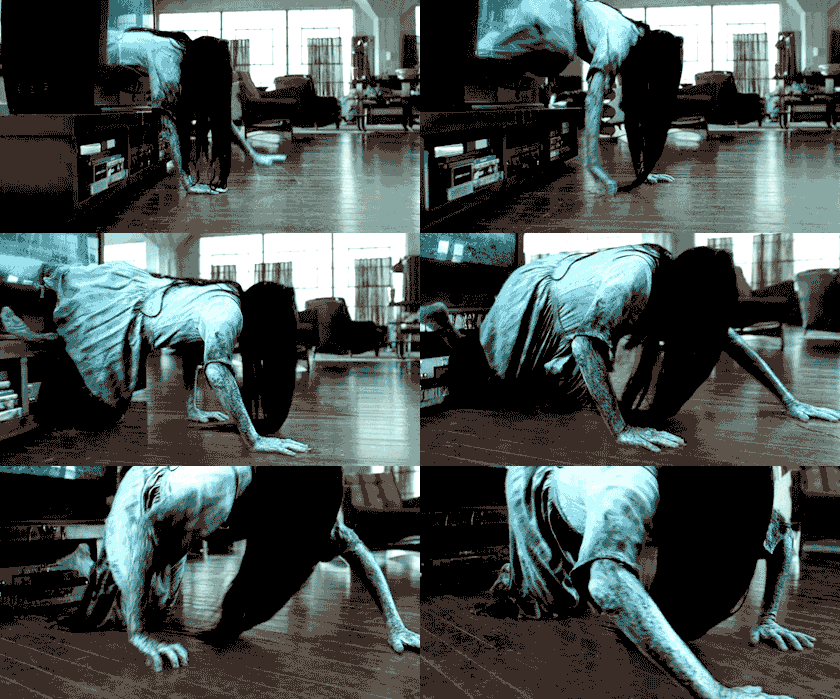
Aria and I met during our FPOP (#DMSE4lyfe except obviously that didn't work) when we both thought that we wanted to be course 3 because we liked biomaterials. Unsurprisingly, I spoke to literally 0 people during the entirety of the program. The first time Aria and I interacted was on the last day when I walked into the bathroom to see someone crawling out from under the stall door, looking exactly like this:
scary samara the ring
supersized for your viewing pleasure

Needless to say, it was a very impactful first encounter. I'm still unsure of how we ended up even talking to each other in the end, but we actually ended up living in the same living group for 2 entire years. That's so many years. Obviously, those who have read Aria's blog post will understand that we knew what we were getting into when we chose to be lab partners. But at least it worked out in the end? I definitely would not have been able to express my constant inner angst and turmoil regarding the many, many assignments we had to do (and also maybe still my understanding of the material) if I didn't know my lab partner as well as I know Aria. Also I'm sure other people would not have been able to put up with my intense procrastination and flaky tendencies so clearly I got the better end of the deal in this unequal partnership.

But yes. I think 20.109 ranks as my favorite class out of all of the classes I have taken at MIT. The material covered was super diverse and (mostly) interesting and as everyone mentioned before me, the teaching staff was A++ 10/10. Although I felt like I was drowning in a sea of assignments and homework for basically half of the semester, in the end I think I appreciate having the homework assignments because they really did make it easier to write the culminating reports at the end of each module. Thanks everyone for a fantastic semester and see you all in 330/309/380!!

https://michellebookaddict.files.wordpress.com/2016/01/4f15ca326d661fd71177bcd909ec6023cc4b1688aee152ebb815e15a8fc380f8.jpg?w=350